
ITER: The World’s Most Ambitious Project
www.deerfieldfocalpoint.com/articles/iter-the-worlds-most-ambitious-project
Harnessing the power of stars has long been dreamed of by humans. It was not until the 20th century that scientists started to understand stars’ energy. British astrophysicist Arthur Eddington is attributed as the first person to correctly speculate the source of energy of stars: nuclear fusion. The process of nuclear fusion fuses atoms into new elements, releasing lots of energy in the process. In 1920, he specifically suggested that the sun’s energy comes from fusing hydrogen into helium.
In 1934, Ernest Rutherford, famous for the model of the atom named after him and the Nobel Prize in Chemistry, along with his assistant Mark Oliphant, achieved the first man-made fusion reaction by synthesizing helium by bombarding various substances with deuterium, an isotope of hydrogen with one neutron. Many reactions were discovered in the following years but one reaction stood out. The deuterium-tritium fusion, which creates a helium atom and releases a neutron from a deuterium and a tritium atom, is currently considered the best reaction for fusion energy. One gram of deuterium-tritium fuel mixture rivals thousands of gallons of oil and around ten tons of coal.
Fusing atoms requires extreme amounts of energy, even for the lightest element, hydrogen, due to the extreme speeds required to overcome the electrostatic repulsion between the atoms and for them to fuse. With these extreme amounts of energy, the reactants become plasma, which brings about the additional problem of confining it. The matter is too hot to contact any solid material and has to be confined in a vacuum. Currently, the leading method of confinement is magnetic confinement, which appears in devices such as a tokamak, one of the most practical methods of controlled fusion reaction. Invented around the 1950s in the Soviet Union, the devices use superconducting magnets to confine and guide the conducting plasma.
Combining all of these theories and research, ITER aims to finally create a large and energy-profitable nuclear fusion reactor. Created in the 1980s, the ITER organization did not start to build a reactor until 2006. The ITER reactor will be by far the largest fusion reactor, with over ten times the plasma volume of any other fusion reactor today. However, the primary purpose of the reactor is for research. It will not produce electricity and will instead act as a technology demonstration and research facility to pave the way for future commercial reactors. With millions of parts assembled into a 23,000-ton reactor containing 3,000 tons of superconducting magnets, the reactor is described as the most complicated construction project ever and the most expensive science experiment ever. Originally scheduled to be completed in ten years costing 5 billion euros, ITER significantly underestimated the time, complexity, and cost of the project. In 2016, the cost estimate was adjusted to 18 billion euros, and the estimated time of completion was adjusted to 2025.
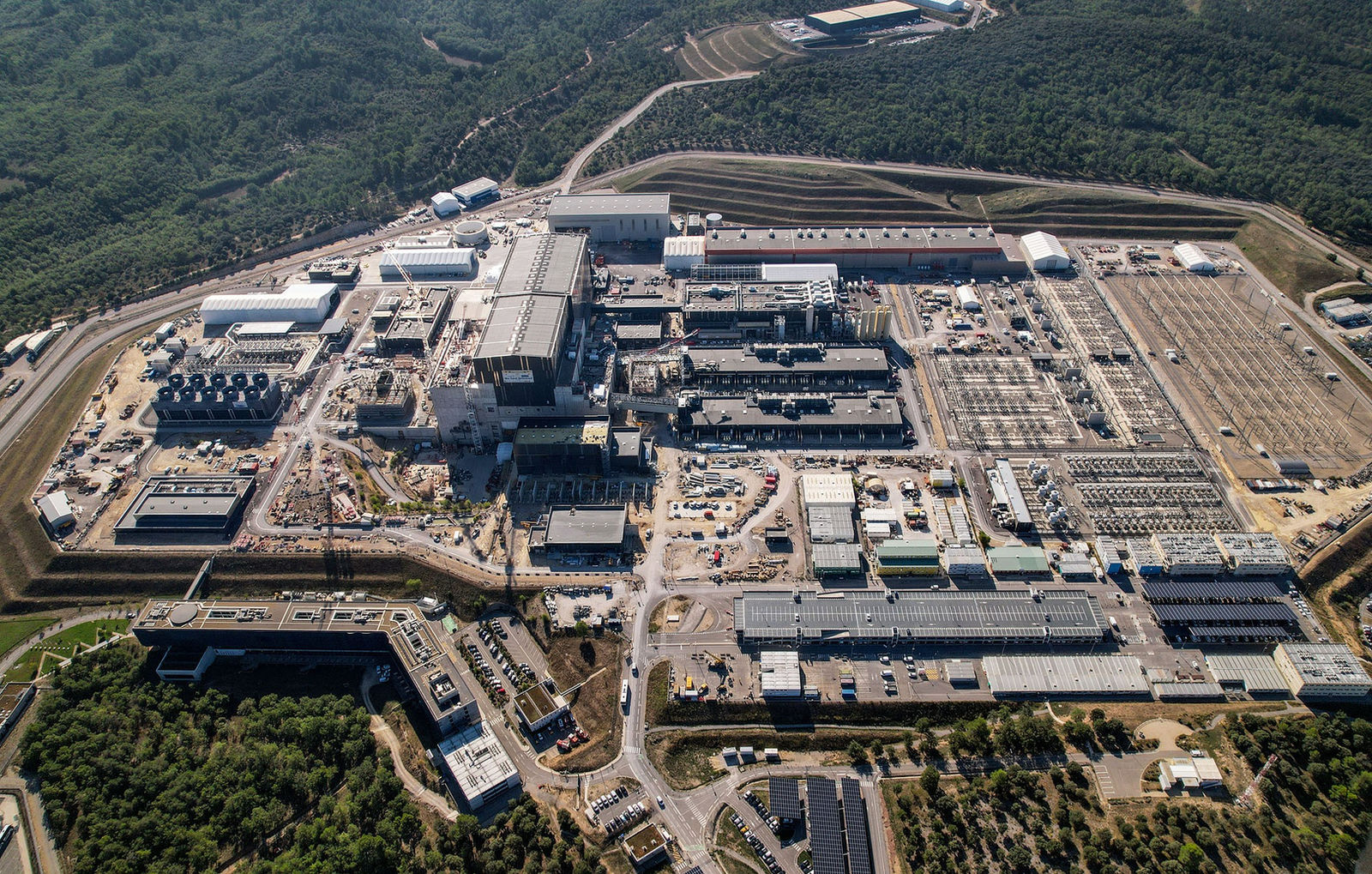
Despite the huge sums of money poured into the project, the reactor is still facing huge technological hurdles and other issues that continue to derail the timeline and cost estimate. Partially caused by the COVID-19 pandemic and supply chain issues, the project was pushed back in 2022. ITER components such as superconducting coils and the vacuum vessel were delayed by years. Some parts were even flawed: parts of the vacuum vessel were not manufactured with enough precision, and some thermo shields keeping the coolant cold for the superconductors corroded. Other problems compounded these delays and cost overruns: some welders did not have certifications for nuclear-plant-grade welding, and the French Nuclear Safety Authority was unconvinced of the regulatory compliance for radiation levels around the reactor.
ITER is also criticized for its lack of transparency. The website described an initial operation date of 2025 as recent as late 2022, despite the fact the closed meetings in 2021 had already identified major problems with the project. As of early 2024, the timeline of the project is still unclear, and press releases by the ITER organization have left some issues unanswered.
While the delays of megaprojects are not uncommon, ITER’s cost and lengthy delays still stand out when compared to other large-scale projects. It has been over forty years since the conception of the project, spanning three generations of scientists. But the implications of ITER are also unprecedented—many scientists consider nuclear fusion as the most efficient, most powerful, and overall best energy source. Only time will tell what ITER will
Notes
- Who “Invented” Fusion? (2014, May). Retrieved April 1, 2024, from https://www.iter.org/mag/3/29 Back
- DOE Explains...Deuterium-Tritium Fusion Reactor Fuel. (n.d.). Retrieved April 1, 2024, from https://www.energy.gov/science/doe-explainsdeuterium-tritium-fusion-reactor-fuel Back
- Seife, C. (2023, June 15). World’s Largest Fusion Project Is in Big Trouble, New Documents Reveal. Retrieved April 1, 2024, from https://www.scientificamerican.com/article/worlds-largest-fusion-project-is-in-big-trouble-new-documents-reveal/ Back
- Tirone, J. (2023, June 22). Biggest Fusion Energy Reactor Faces More Delays, Higher Costs. Retrieved April 1, 2024, from https://www.bloomberg.com/news/articles/2023-06-22/biggest-fusion-energy-reactor-faces-more-delays-higher-costs Back
- Frequently Asked Questions. (n.d.). Retrieved April 1, 2024, from https://www.iter.org/FAQ Back