
Boeing’s Starliner
www.deerfieldfocalpoint.com/articles/boeings-starliner
On June 5, 2024, Boeing made history with the third launch of its Starliner capsule, known as The Boeing Crew Flight Test (Boe-CFT). This mission was significant as it marked the first time the Starliner carried a crew to the International Space Station (ISS).
Initially planned as an eight-day mission, Boe-CFT was part of a series of three launches aimed at verifying the safety and readiness of Boeing’s second series of privatized spacecraft designed for orbital missions. However, problems soon arose as the capsule prepared to dock with the ISS, a complicated but internationally standardized procedure that the Starliner capsule had completed in its previous flight. Despite thruster malfunctions that could jeopardize the alignment of the capsule’s docking pins and a concerning helium leak which could have prevented the pressurization of the capsule during docking, the Starliner was able to dock successfully. Astronauts Sunita “Suni” Williams and Barry “Butch” Wilmore were also able to make their transition onto the ISS safely.
Debates ensued at NASA headquarters about whether the compromised spacecraft was able to safely bring the crew back to Earth at the end of their mission. This uncertainty resulted in the extension of the crew’s stay on the ISS from the planned eight days to over five months—and counting. Expectedly, these technical issues once again propelled Boeing, whose reputation for safety was already at stake, into the media cycle. But how did Boeing go from the engineering juggernaut whose 747 commercial airliner had been given the title “Queen of the Skies” to a company criticized for valuing stockholder shares over product quality?
The Boeing-McDonnell Douglas merger in December 1996 is often cited as an inflection point in the direction of the corporation when the end of the Cold War convinced Boeing it needed a stronger foothold in the military sector. The merger was largely incentivized by the record number of military-related contracts that Boeing saw during the Cold War and the upper management’s fear that there would be a large drop-off in those contracts after the war ended. Boeing’s success during the 1960s also saw its first diversification into space exploration, securing a deal as NASA’s primary contractor for the first stage of the Saturn V rocket, which launched the mission to the Moon in 1969.
McDonnell Douglas, a major aerospace manufacturer, and military defense contractor formed in 1967, was one of Boeing’s leading competitors at the time. Before the merger, Boeing was known for its innovative engineering, whereas McDonnell Douglas was better known for their profit-first approach and prioritizing the opinions of their stockholders before their engineers. After the merger, Boeing quickly adopted the corporate culture of McDonnell Douglas. A quote by former Boeing CEO Harry Stonecipher encapsulates the change in ideology: “When people say I changed the culture of Boeing, that was the intent, so it’s run like a business rather than a great engineering firm.” However, the change in ideology from focusing on the quality of engineering to profit margins led to a period where Boeing saw financial success with little adversity.
The first major quality-related controversy that the modern Boeing was caught up in revolved around the Boeing 737 Max, a sequel model to their flagship 737 made to compete with Airbus’s A320neo. Due to the 737’s design placing its engines closer to the ground, the 737 Max had to relocate their engine placements to fit the fuel-efficient engines that the A320neos were equipped with. Instead of warning airlines about this design change, which would require additional pilot training, Boeing instead included a piece of software, the Maneuvering Characteristics Augmentation System, or MCAS, to alleviate the issue by automatically pitching the plane down during takeoff.

On the 29th of October 2018, only two years after the first flight of the model, the first tragedy with the 737 Max was reported: a domestic passenger flight in Indonesia crashed into the Java Sea, killing 189 people. Just 5 months later, all 157 passengers aboard Ethiopian Airlines Flight 302 died due to the loss of control during the flight. These incidents, backed up by multiple whistleblower accounts, attracted unwanted attention for Boeing in the media, where leadership failures and the flawed culture within the company were greatly magnified.
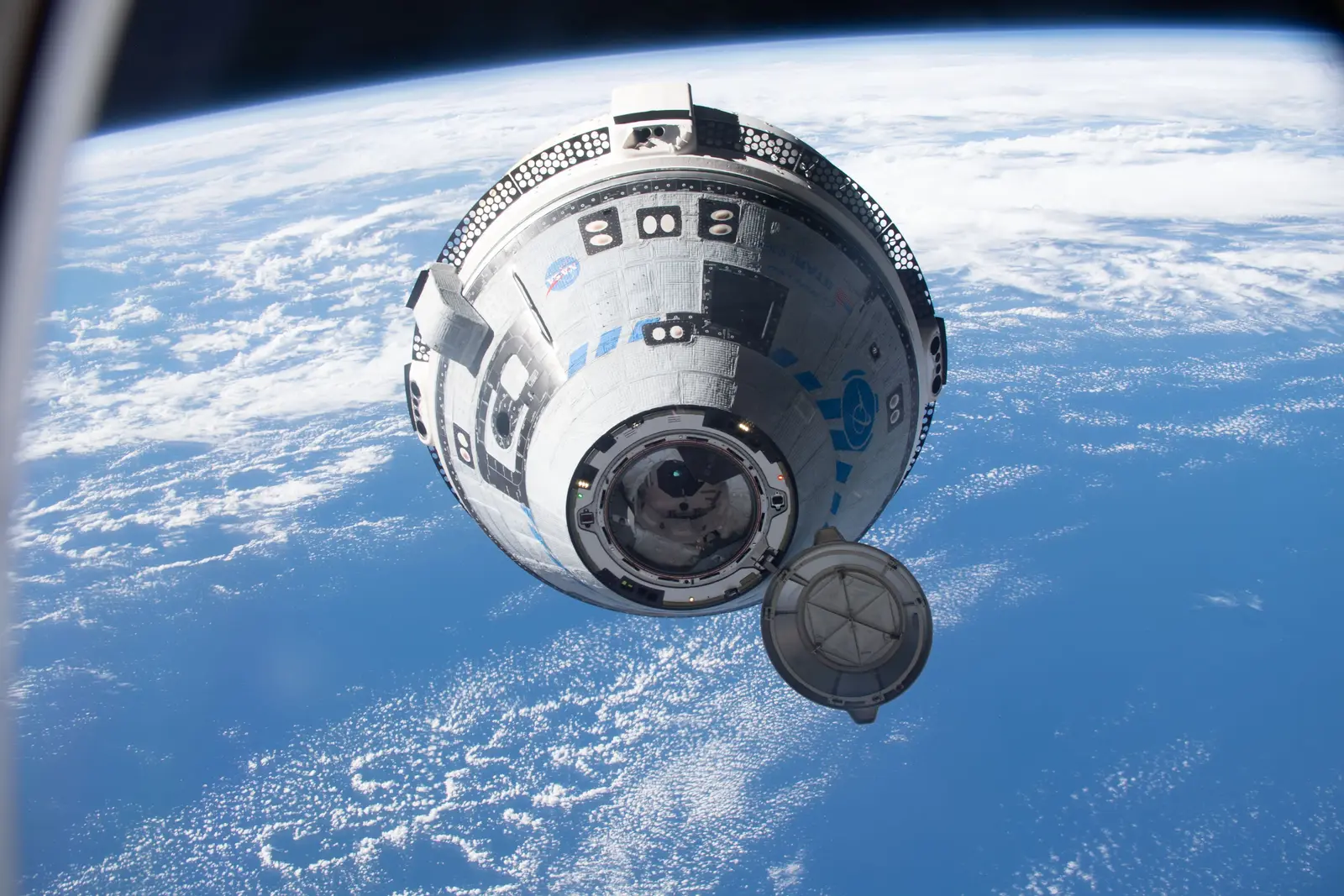
At the time of writing, NASA has announced that the Starliner crew will stay on the ISS until their return alongside SpaceX’s Crew-9 mission for NASA around February 2025. While the Starliner capsule managed to undock from the ISS and return to Earth safely on September 7 without its crew, this incident marks another blemish on Boeing’s already tarnished reputation.
Notes
- Boeing 737 MAX groundings. (2024, October 27). Wikipedia. Retrieved November 11, 2024, from https://en.wikipedia.org/wiki/Boeing_737_MAX_groundings Back
- ColdFusion. (2024, February 29). Boeing’s downfall [Greed over safety] feat. mentour pilot [Video]. YouTube. https://www.youtube.com/watch?v=vqgTcb8DqfY Back
- ColdFusion. (2024, August 25). Boeing embarrassed as ‘Stuck’ astronauts to return with spacex [Video]. YouTube. https://www.youtube.com/watch?v=RfCKdc1ACXA Back
- Holt, J. (2020, February 3). How Boeing lost its way. Forbes. https://www.forbes.com/sites/josephholt/2020/02/03/how-boeing-lost-its-way/ Back
- Niles-Carnes, E. (2024, September 7). NASA’s boeing crew flight test. NASA. Retrieved November 11, 2024, from https://blogs.nasa.gov/boeing-crew-flight-test/category/boeing/ Back

