
Biodegradable Plastics
www.deerfieldfocalpoint.com/articles/biodegradable-plastics
The detrimental effects of plastics made of synthetic polymers, which are in widespread use today in anything from electronics to water bottles and textiles, in the biosphere have long been documented. These harmful practices have included plastic ingestion by not only marine species but also humans: microplastics, or minute pieces of plastic measuring less than five millimeters, have been found in kidneys, livers, and placentas, according to a 2021 report by the United Nations Environment Programme. The current effects of microplastics themselves on human function are unclear, but products that break down into microplastics have been found to include additional, often carcinogenic, chemicals. Additionally, as plastics are usually made from petroleum, they currently contribute to 3.4% of the world’s greenhouse gas emissions.
However, plastics’ ease of access to lower socioeconomic classes has been hard to beat in the past century. Alternative natural materials, like glass, metal, or ivory, are more limited in supply, less versatile, more brittle, and often more expensive. The longevity of modern plastics like polystyrene (Styrofoam) and polyvinyl chloride (PVC) is often portrayed negatively because they are not easily biodegradable and will likely last hundreds or thousands of years.
At their core, plastics are made of polymers—long chains of carbon monomers strung together. Biodegradation typically occurs through hydrolytic reactions where polymers break down into monomers and eventually into carbon dioxide and water. The polymers of non-biodegradable plastics break apart into these smaller molecules much slower than biodegradable ones.
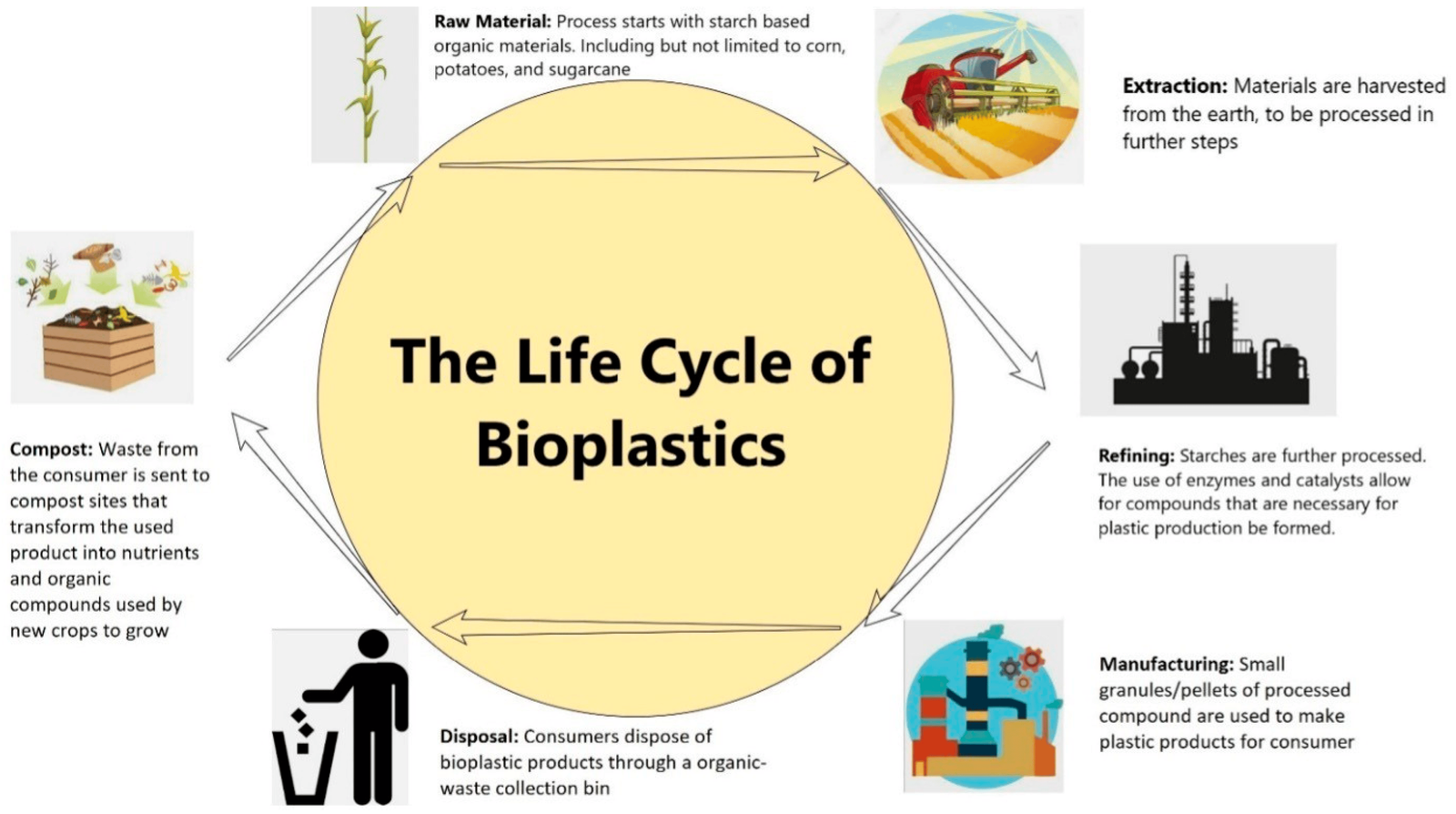
Thus, in part due to a move toward a more eco-friendly approach to plastic, the topic of biodegradable plastics (as well as bioplastics, which are biodegradable plastics made from renewable sources rather than oil) has appeared more prominently in recent decades. These plastics may be broken down by microorganisms relatively quickly and do not persist in nature.
In a paper published in the International Journal of Molecular Science, Tokiwa et al. (2009) examined the mechanisms of biodegradation, comparing characteristics of polymer-degrading microbial enzymes with those of different types of plastics. Microbes that can decompose plastics are diverse and include many kinds of bacteria and fungi.
Tokiwa et al. (2009) identified increased molecular weight, side chains in the molecule’s structure, higher crystallinity, and higher melting temperature as notable factors that decreased biodegradability in plastics.
More biodegradable plastics include aliphatic polyesters and aliphatic polycarbonates. Some polymers like polyurethane are only partially biodegradable, while less biodegradable plastics listed in the study included nylon, polyethylene (commonly used for items like shopping bags and bottle caps), polypropylene (of which many use cases overlap with polyethylene), and polystyrene (Styrofoam).

Moshood et al. (2022) concluded in a study of the effectiveness of biodegradable plastic in regard to reducing “global plastic pollution” that such plastics do have the potential to be a viable replacement for non-biodegradable plastics as they are currently used; current primary challenges include little research, high production costs, and low performance.
Notes
- History and future of plastics. (n.d.). Science History Institute. Retrieved May 26, 2024, from https://www.sciencehistory.org/education/classroom-activities/role-playing-games/case-of-plastics/history-and-future-of-plastics/ Back
- Impacts of plastic pollution. (2024, April 23). United States Environmental Protection Agency. https://www.epa.gov/plastics/impacts-plastic-pollution Back
- Moshood, T. D., Nawanir, G., Mahmud, F., Mohamad, F., Ahmad, M. H., & AbdulGhani, A. (2022). Sustainability of biodegradable plastics: New problem or solution to solve the global plastic pollution? Current Research in Green and Sustainable Chemistry, 5, 100273. https://doi.org/10.1016/j.crgsc.2022.100273 Back
- Tokiwa, Y., Calabia, B. P., Ugwu, C. U., & Aiba, S. (2009). Biodegradability of plastics. International journal of molecular sciences, 10(9), 3722–3742. https://doi.org/10.3390/ijms10093722 Back

