
News from LIGO
Scientists at LIGO Confirm Einstein’s Space Wave Theory
www.deerfieldfocalpoint.com/articles/news-from-ligo

Looking into space, one can only see a vast black void cluttered with a multitude of dots, each representing a planet, star, or galaxy, billions of light years away. It is hard to imagine space as anything else except for this black abyss. A team of three scientists recently won the prestigious Nobel Prize in Physics for their confirmation of the existence of gravitational waves (ripples in the curvature of spacetime) in outer space. For simplicity, one can think of spacetime as a two--dimensional plane that deforms around the planets and stars that rest in it. After certain gravitational interactions, like the collision of two black holes, ripples in the spacetime plane will result and propagate far outward through the universe depending on the magnitude of the event. For instance, since black holes have such substantial gravitational attraction that they cause deep cavities in the spacetime curvature, the collision of two such entities results in gravitational waves that can be detected from Earth, millions of light years away.
Predicted in 1916 by Albert Einstein, these waves were theoretical, existing only in mathematical proofs. As he stated in his general theory of relativity, gravity exists only due to warps in spacetime caused by mass and energy. This led Einstein to predict that a twirling, barbell-shaped arrangement of two black holes would cause ripples to radiate through space at light-speed, similar to the ripples in a pond. Though the first gravitational waves from a binary system (consisting of a neutron star and an orbiting pulsar) were discovered in the 1970s by Joseph Taylor Jr. and his colleagues, a team of researchers from the Laser Interferometer Gravitational-Wave Observatory, or LIGO, recently became the first to detect gravitational waves caused by the collision of two black holes.
Rainer Weiss of MIT, and Kip Thorne and Barry Barish of CalTech were the three leaders of this massive experiment. While Weiss and Thorne were key in establishing plans for LIGO, Barish guided the construction of the twin LIGO observatories in Hanford, Washington, and Livingston, Louisiana.
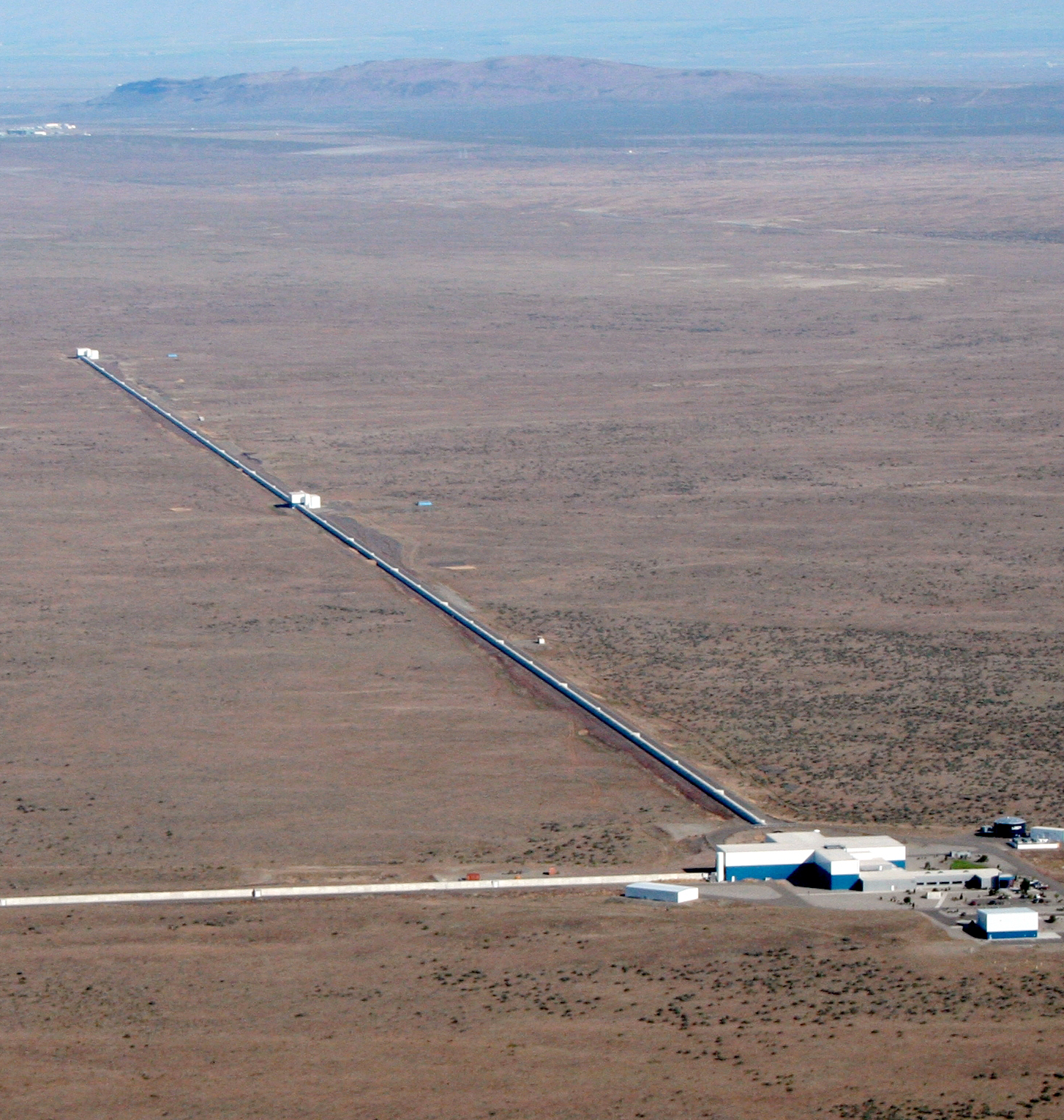
In order to detect the short-lasting gravitational waves, LIGO consists of L-shaped interferometers which act like perpendicular rulers. Within these arms, laser light bounces back and forth, and, once a gravitational wave comes in contact, the scientists can measure the differential stretching in the light caused by the wave. In fact, the LIGO detectors are able to detect differences in length as small as 1/10000 the width of a proton.

Despite the scientists’ momentous discovery and the reward for their efforts, Weiss, Thorne, and Barish were slightly embarrassed and uncertain as to how to think of their Nobel Prize. In fact, Barish said in an article written in Science, “I have somewhat ambivalent feelings about the recognition of individuals when so much of this was a team effort.”
With a project as extensive as LIGO, it does seem inappropriate to focus attention on a few key members out of nearly 1000 scientists and engineers on the team. Nevertheless, to a scientist, the value of this groundbreaking detection of ripples in the spacetime curvature from black holes trumps any award. Though there’s still much to learn about these seemingly invisible undulations in outer space, our understanding of the uncharted cosmos is slowly but surely growing, thanks to pioneering research like that of LIGO.
Notes
- Cho, Adrian. “Ripples in Space: U.S. Trio Wins Physics Nobel for Discovery of Gravitational Waves.” Science | AAAS, Science, 3 Oct. 2017, www.sciencemag.org/news/2017/10/ripples-space-us-trio-wins-physics-nobel-discovery-gravitational-waves. Back
- “What Are Gravitational Waves?” LIGO Lab | Caltech, www.ligo.caltech.edu/page/what-are-gw. Back


