
DNA Extraction from Rootless Hair
www.deerfieldfocalpoint.com/articles/dna-extraction-from-rootless-hair
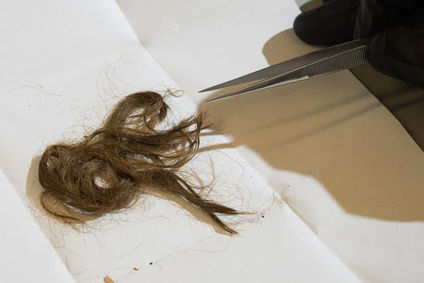
Hailing from the field of archeology, paleogeneticist Ed Green seems like an unlikely candidate to solve countless previously unsolved crimes. Back in 2016, at the University of California, Santa Cruz, he was part of the team that sequenced the Neanderthal genome from 38,000 year-old bones. Recently, he has once again found himself in the spotlight, this time for finding a method to extract accurate DNA samples from rootless hair.
DNA forensics started in 1986, when it was used in a British case to verify a confession in a murder case. The first case to use DNA evidence in the U.S. was in 1987, and it was further cemented into our investigative practices with a court case that ruled in favor of its validity in 1989. Since then, hair has been one of the main sources of DNA evidence used in investigations, as in the chaos of a crime, it is highly likely that at least one strand of hair can be found at the crime scene. However, a major obstacle for using this kind of evidence is that the DNA is extracted from the hair follicle, not the strand itself. Thus, for many years, the drawbacks from requiring the hair follicle for DNA extraction have left many cases without any suspects, and they have prompted scientists to try and formulate a method for extracting DNA from the strand of hair itself without being dependent on the follicle. Green’s new method of extracting DNA has helped identify the Golden State Killer, and has identified three of the four people murdered in a separate case in 1985, among countless other cases the now-legendary scientist cannot legally expose.
Green regularly receives boxes of hair—sometimes of victims of crimes, other times of serial killers. He takes each of these samples and extracts the DNA, a process that costs thousands of dollars. He admits that the cost of this extraction is the factor that will keep this method of investigation exclusive to high-profile cases and not in any average crime lab. When developing his revolutionary technology, the moment that he tested it and found that it worked was one of elation. After uploading his own DNA from his hair to a genealogy website and receiving a list of relatives in return, he was beyond excited at all of the possibilities that could arise from this breakthrough. All of this means bad news for criminals - past, present, and future.
Justin Loe, a friend, colleague, and CEO of Full Genomes, a DNA Sequencing company, says about the discovery, “Criminals think of wearing gloves or wiping down blood,” he said, “but fewer think to shave their heads.” In the end, law enforcement has a powerful new tool to bring justice to criminals who would not have been caught otherwise.


